Guides
A guide to freeze-thaw restriping cycles in Chicago and Denver
Freeze-thaw restriping in Chicago and Denver runs on repair sequencing, narrow spring and fall windows, and annual lot maintenance contracts.
What to take away
- Repair first, stripe second. Paint over a green patch peels inside one season, and the owner blames the striper.
- Chicago's window runs late April to mid October. Denver's runs March to November, with spring snow costing weather days.
- A seasonal contract sells four visitsspring inspection, pothole and crack repair, striping after cure, fall touch-up.
- Confirm the permit path before you quote. A restripe scope can turn into permitted repaving once the potholes are counted.
- Thermoplastic outlasts latex under plow contact, at higher material cost and longer cure.
How freeze-thaw cycles break a lot
Water enters a crack, freezes overnight, expands, and pushes the asphalt apart. It thaws the next afternoon and drains deeper. Run that cycle forty or fifty times and a hairline crack becomes a two-inch gap with loose aggregate at the edges.
Chicago runs it hardest December through March, with repeated melt and refreeze off the lake. Denver runs a faster version: afternoons near 50 degrees, hard freezes at night, dry air pulling moisture out of the subbase. Same failure, different clock.
Three forms show up. Potholes open where water pools under the surface course. Alligator cracking spreads across drive lanes and turn radii. Heaves lift slab edges at expansion joints, and that is where most plow damage starts.
Plow damage is what property managers call about first. Steel blades catch raised pavement, tear out paint, and scrape stall lines to bare asphalt. One hard winter can erase a third of a lot's markings.
Track freeze-thaw counts, not snowfall totals. The count tells you when the subbase is moving and when a patch will hold.
Sequencing repair before restriping
Striping a failing surface wastes the owner's money, and owners now ask about it. The order is fixed.
- Walk the lot and mark every pothole, crack, and heaved slab edge with paint or flags, and photograph each one for the estimate.
- Cut and square potholes to sound asphalt, then patch with hot mix or a cold patch rated for that day's temperature.
- Route and clean cracks wider than a quarter inch, then fill with a hot-pour sealant that stays flexible below freezing.
- Let patches cure fully, several days in spring and longer in fall, before marking equipment touches the surface.
- Restripe last, from the same layout plan, so stall counts and access aisles come back unchanged.
Skipping step four is the common failure. Paint laid over a green patch peels within a season.
Plow damage repair belongs in the same visit as pothole work. Push plates, wing damage, and scraped curb lines get fixed before the striper arrives, which saves the owner a second mobilization and usually wins the repeat job.
Selling repair, seal, and stripe as one scope is easier to approve than three invoices, which is the argument in how to package parking lot striping services.
Spring and fall windows in each city
Most marking materials need surface temperature above roughly 50 degrees to cure. That sets Chicago's season at late April through October, busiest in May and June.
Chicago's fall has a hard edge. Anything applied after mid-October risks freezing before full cure, and thermoplastic that freezes early can pop off in sheets the following winter.
Denver gets the longer, more forgiving window. The Front Range usually allows work from March into November, though spring snow can shut a job for a week without warning. Build weather days into every spring estimate there.
Denver's fall is the better of the two for new markings. Dry air and warm afternoons cure sealcoat and paint fast, and the lot is ready before the first hard freeze.
Striping window
- Chicago
- Late April to mid October
- Denver
- March to November
Repair window
- Chicago
- May to August
- Denver
- April to September
Main risk
- Chicago
- Early fall freeze before cure
- Denver
- Spring snow and hail
Both cities share one rule: repair in the warm months, stripe immediately after. A lot patched in July and striped in September holds far better than one patched in October.
Hail resets Denver's schedule. One storm can scar a lot and total a roof in the same afternoon, and repaving demand spikes right after. Stripers with the repair scope already on file get called first.
What a seasonal maintenance contract contains
A seasonal contract sells a schedule, not a single job. The owner gets a fixed scope, a fixed number of visits, and no surprise invoice after a bad winter.
Four parts make it work. An annual lot inspection in early spring. A repair visit for potholes and cracks. A striping visit after cure. A fall touch-up for plow-damaged areas. Price the year and bill in installments.
Retail centers, office parks, and apartment communities all fit, with different priorities. Retail counts stalls and watches customer safety. Offices want appearance and liability covered. Apartments care about snow removal coordination and turnover parking.
Underbidding happens here. Build in repair hours, mobilization, and a weather contingency, or the second visit eats the margin on the first. Prices and margins move with asphalt cost and crew availability, so revisit the number each year.
A worked example on a 120-stall Chicago lot
Take one 120-stall lot on the North Side. The spring inspection turns up roughly 40 potholes, 600 linear feet of crack fill, two heaved slab edges, and a full restripe.
Price it as two visits. Spring covers the pothole patches, the crack fill, and the restripe once patches cure. Fall covers plow-damaged stall lines and any new cracking.
The owner budgets one annual figure instead of three separate calls, and you hold the lot for both mobilizations. That structure is what packaging parking lot striping services looks like when it is built around the freeze-thaw calendar rather than around individual services.
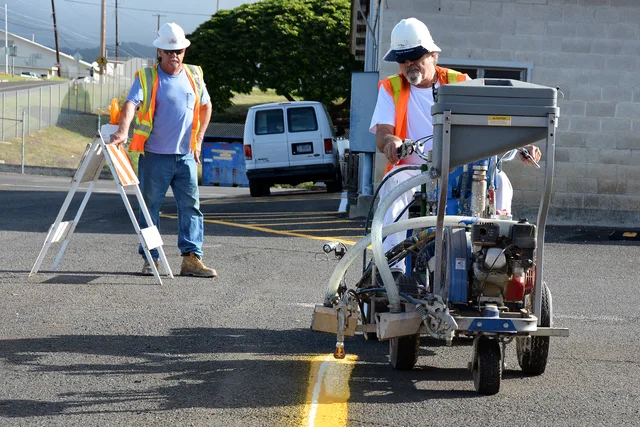
Referrals come out of this model more than any ad spend. A manager who gets a clean lot every April tells the manager of the next property over, and your parking lot striping equipment choices compound across that portfolio.
Permits and local requirements
Chicago regulates pavement and site work through the Department of Buildings. Most commercial lot work touching drainage, grades, or the public way needs a permit before a crew mobilizes, and the Department of Buildings publishes the current code context for site work.
Applications, contractor registration, and inspection scheduling run through the city's Chicago permit applications portal. Stripe-only work on an existing approved layout usually does not need one. Repaving, new islands, and curb cut changes do.
Chicago also enforces the public way. Work touching the sidewalk, parkway, or alley approach falls under a separate right-of-way process, and crews that skip it get shut down mid-job.
Denver runs its own path through community planning and development. The trigger is similar: structural changes, drainage, and right-of-way work need approval, while like-for-like restriping generally does not.
Both cities require ADA compliance on any restripe that changes layout. Fire lane markings fall under NFPA rules, and a lot that loses fire lane striping during a repaint has to get it back in the same visit.
Confirm the permit path before quoting. A scope that reads as restriping can become a permitted repaving project once the potholes are counted.
Material choice is the other technical call. Paint, thermoplastic, and preformed tape behave differently under plows and freeze-thaw, and the standards behind them are covered in the background on road surface marking.
Layout conventions matter too, since stall geometry, aisle widths, and drainage slope decide how fast a lot fails, and the general design background on a parking lot is useful when a layout has to be rebuilt rather than repainted.
Crews adding routes across both metros should read expansion: the practical version, which covers running the Chicago and Denver seasons back to back.
Common questions
How long does striping last in Chicago versus Denver?
Chicago markings usually need attention every year, because plows and freeze-thaw strip them. Denver lots often hold two seasons, though hail and repaving reset the clock.
Does restriping need a permit in Chicago?
Like-for-like restriping on an approved layout usually does not. Repaving, new islands, drainage changes, and public way work do, and those go through the Department of Buildings.
When should pothole repair happen relative to striping?
Repair first, always. Patches need to cure fully before marking, which in Chicago usually means a July repair and a late summer stripe.
Why does plow damage matter so much in these two cities?
Snow removal runs for months in both metros, and steel blades scrape paint and catch raised pavement. Marking a lot without planning for plow contact wastes the paint.