Guides
How Texas and Florida property managers buy striping work
Texas and Florida striping awards turn on local spec sheets, insurance endorsements, retainage terms and the ADA and fire lane counts buyers verify first.
What to take away
- The spec sheet decides the award. Read the layout exhibit before you price anything, and ask when the drawing's stall count disagrees with the scope table.
- Houston and Dallas buyers cite city right-of-way rules and third-party manager scopes; Miami and Fort Lauderdale buyers add county permits and hurricane-season scheduling.
- Price ADA stalls, van-accessible access aisles and fire lane linear feet as separate lines. A single square-foot rate buries the work that carries the risk.
- Certificates of insurance pass or fail review before anyone reads your number. Attach the additional insured and waiver of subrogation endorsement pages, not just the certificate.
- Net 30 is the private norm, net 45 to net 60 shows up on REIT and municipal work, and retainage runs 5 to 10 percent on jobs above roughly $25,000.
- Follow up once, five to seven business days out, with a scope question. Log the award date and the repaint cycle so the next bid lands early.
What a Texas or Florida striping spec actually contains
A commercial striping spec runs four to ten pages and covers scope, layout, materials, schedule, insurance and payment. The layout exhibit is the part that decides your margin.
If the stall count on the drawing does not match the count in the scope table, ask before you price, because the lower count is the one you will be paid against.
Houston specs pull in city right-of-way and development requirements whenever the lot touches a public street or a shared driveway. The City of Houston Planning and Development Department publishes the rules that shape driveway approaches and sight lines at exits. Striping that blocks a required sight triangle fails inspection and comes back at your cost.
Dallas specs usually come from third-party property managers working for institutional owners. Expect a stall-by-stall count, a named paint type, and a cure window before the lot reopens. Many Dallas offices want a striping plan stamped by the original civil engineer when the layout changes.
Miami specs add weather and permitting language. Miami-Dade County requires permits for a range of construction and site work, and managers there ask whether your scope triggers one. See Find a Permit - Miami-Dade County for the county process. Salt air and summer storms push buyers toward thicker thermoplastic or high-build latex.
Fort Lauderdale specs read like Miami with more small-lot work: retail centers, medical offices, marinas. Broward County buyers often want night work so tenants keep daytime parking, and the spec says so. Night work changes your labor cost, so price it as its own line rather than absorbing it.
Across all four markets the spec names the same items:
- Total stall count, split into standard, ADA and van-accessible
- Access aisle locations and dimensions
- Fire lane path, width and marking method
- Paint or thermoplastic type, color and dry film thickness
- Layout dimensions and any change from the existing lot
- Work hours, phasing and lot closure windows
- Restoration of existing markings and cleanup
If a spec omits the ADA and fire lane counts, price them as an allowance and say so in the proposal. Silence in the spec becomes an argument at invoice time.
Contractors who quote from a template instead of the drawing lose margin on exactly those lines, which is why a repeatable enquiry to quote process beats a fast number.
Insurance certificates and bonding documents buyers request
Insurance is pass or fail in both states. Property managers and their asset managers will not open your price until the certificate of insurance arrives with the right endorsements attached.
The common floor is $1 million per occurrence and $2 million general aggregate on general liability. Institutional owners in Dallas and Houston often ask for $2 million per occurrence.
Auto liability at $1 million combined single limit is standard because you drive equipment to the site.
Workers compensation is required in both states once you have employees, and buyers ask for the policy number even where the state exempts sole proprietors.
Two endorsements decide most reviews:
Insurance certificates and bonding documents
- Additional insured, naming the owner and the property manager.
- Waiver of subrogation, so the carrier cannot pursue the owner after a claim.
A certificate alone is not enough. Buyers want the endorsement pages. Your agent can issue both within a day on a routine request, but a new carrier or a large job takes longer.
Build that lead time into the bid calendar. The cost of insuring a parking lot striping business is worth knowing before you promise a limit you do not carry.
Bonding appears in two forms. Payment and performance bonds show up on public work and on large private jobs in Miami and Houston, usually above $100,000.
Bid bonds are rarer in striping but appear on city and school district contracts.
Smaller private jobs in Fort Lauderdale and Dallas usually ask only for a certificate, a W-9 and a signed subcontract.
Small business set-asides are worth checking on public work. The SBA runs contracting assistance programs, and Local assistance - Small Business Administration explains the certifications that can put a striping contractor into a smaller bid pool. Certification takes time, so start before a deadline, not during one.
Keep one PDF with your certificate, endorsements, W-9, license and safety program, and send it with every bid. Buyers who have to chase documents drop the bidder who made them chase.
Net payment terms and retainage by buyer type
Payment terms follow the buyer, not the state line.
Net payment terms and retainage
| Buyer type | Typical terms | Retainage |
|---|---|---|
| Local retail or office owner | Net 30 | None |
| Third-party property manager | Net 30 to Net 45 | 5 percent on jobs over $25,000 |
| Institutional owner or REIT | Net 45 to Net 60 | 10 percent until punch list |
| City, county, or school district | Net 30 after approval | 5 to 10 percent |
Houston and Dallas private work settles fastest, often net 30 with no retainage on repaints under $10,000. Larger Dallas portfolios run through a national property manager, which means an invoice portal, a lien waiver and a 45-day clock.
Miami and Fort Lauderdale jobs look similar, but hurricane season slows approvals while the manager is handling storm damage across a portfolio.
Public work in both states pays net 30 after the agency approves the pay application, with retainage of 5 to 10 percent. That money releases after final acceptance, which can run 60 to 90 days past your last day on site.
Price the float into the job. A 10 percent hold on a $60,000 contract is $6,000 you will not see for months.
Four habits protect you: invoice the day you finish, attach before and after photos, submit lien waivers with the invoice, and confirm the remit-to address in writing. On phased jobs, bill each phase separately so one disputed area does not hold the whole payment.
If a buyer asks for terms longer than net 45, add a line to the proposal: net 45 with a 1.5 percent monthly service charge on balances past 60 days. Most managers accept it. The few who refuse are telling you how they pay.
How ADA and fire lane requirements reach the bid
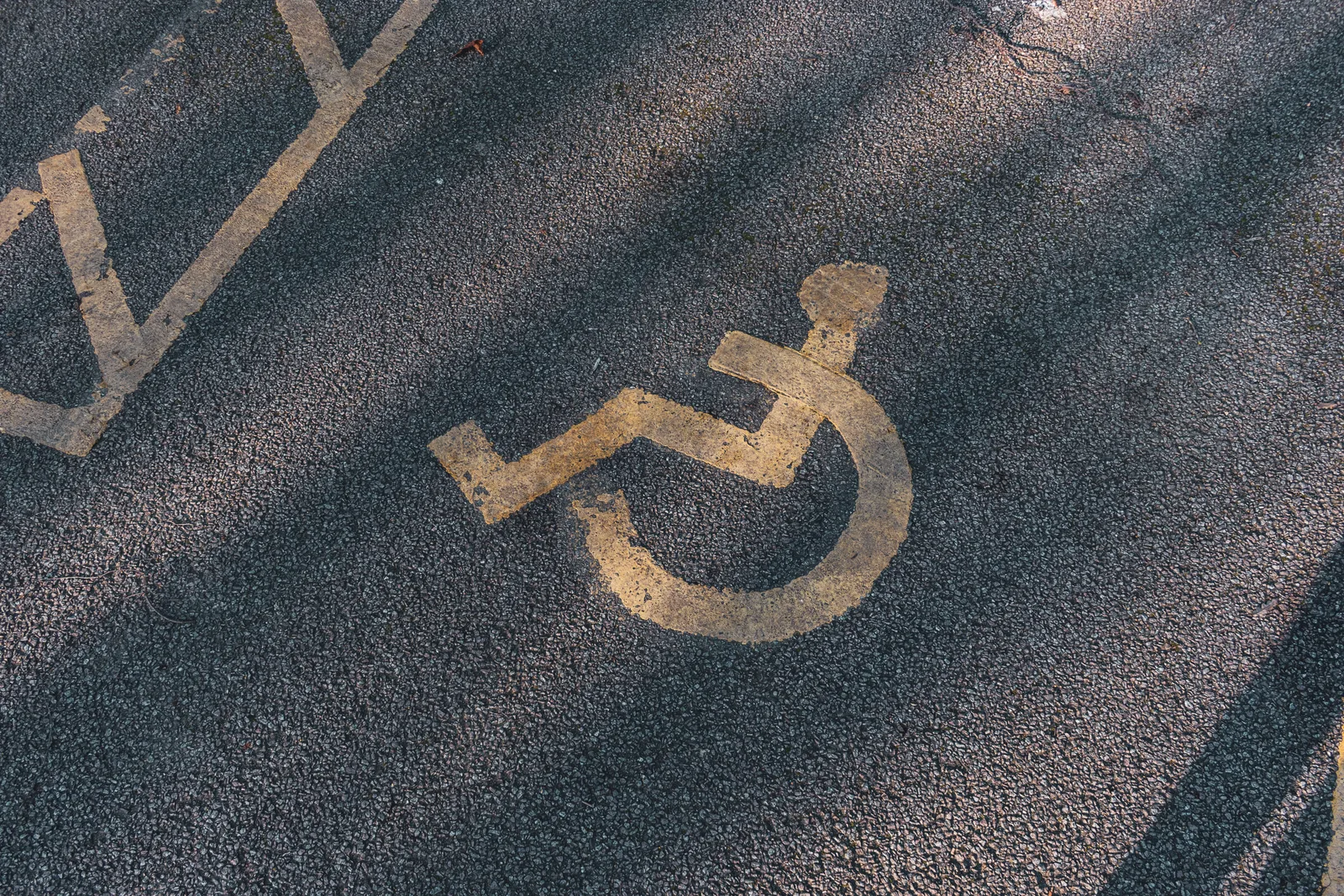
Federal accessible parking rules are the part of the spec buyers check hardest, because a failed inspection can shut a lot down. The 2010 ADA Standards for Accessible Design | ADA.gov sets the stall width, access aisle width, signage and slope rules that appear in nearly every commercial spec.
The authority is the US Department of Justice; whether a given layout satisfies it is a determination for the owner's design professional, not for the crew that paints it.
A bid document lists accessible stalls by type: car, van, and van with a side or rear access aisle. It gives the number required from the total lot count and shows the access aisle next to each stall. Repeat those counts back in your proposal so there is no dispute later.
Three details cause most rework:
ADA and fire lane requirements
- Access aisle striping that fades into the adjacent stall line.
- Signs mounted too low or missing the required symbol and text.
- Van-accessible stalls placed on a slope past the limit.
Fire lanes are the second inspection trigger. NFPA 1 Code Development covers the fire code local jurisdictions adopt, and it is the source property managers cite when they ask for fire lane markings. What your local fire marshal requires is a written question to that office, not a guess from the drawing.
In bid documents the fire lane appears as a path width, a marking method and sometimes a sign or curb color. Houston and Dallas specs usually call for red or yellow markings with the words FIRE LANE at intervals. Miami and Fort Lauderdale specs often add a no-parking hatch pattern at hydrant zones.
Fire lane striping is not decorative. If a fire marshal rejects the layout, most contracts put the repaint on you. Walk the path with the property manager before you start and photograph the agreed route.
Some specs also cite public works and transportation design standards for stall dimensions and aisle widths. Those standards help when a drawing is silent, but the ADA rules control accessible stalls. When the two conflict, ask the manager in writing which governs.
Pricing the bid without leaving margin behind
Price the spec, not the lot. A square-foot rate hides the line items that decide whether the job makes money. New owners can start from a business package for new owners and then cut it down to what the spec requires.
Work through the bid in this order:
- Count stalls from the drawing, not a drive-by, and split them into standard, ADA and van-accessible.
- Measure linear feet of fire lane, curb and hatched area separately.
- Add layout work if the existing lines are faded or missing, priced as its own line.
- Add mobilization, traffic control and night-work premiums where the spec requires them.
- Add permit fees and any engineering stamp the manager requests.
- Apply material cost at the specified thickness, then labor at your real crew rate.
- Add overhead and profit as separate lines so the buyer sees what they are buying.
Material choice drives the rest. Latex paint is cheapest and shortest lived. Thermoplastic lasts longer and costs more per stall, and it is common on Miami and Fort Lauderdale jobs where sun and rain wear markings fast.
Epoxy and preformed tape appear on high-traffic Dallas and Houston sites. Match the material to the spec and to the repaint cycle the owner follows.
Heat is a real cost in both states. Summer crews need shaded breaks, water and electrolyte replacement, and NIOSH publishes the heat and chemical exposure guidance a safety program should follow.
A crew that loses an afternoon to heat illness costs more than the paint.
Traffic control setup and PPE selection belong in a site-specific plan written with a competent safety professional, not improvised on the day.
Sell the package, not the stripe. Packaging parking lot striping services customers understand, such as a repaint bundle with signage refresh and wheel stop replacement, raises the average ticket and cuts the number of bidders you face.
Quote a validity window: 30 days for paint, 14 days for thermoplastic. Material prices move, and a bid that stays open for six months may have to be honored at a loss.
Following up after the bid award
Most striping bids are decided by a committee or one asset manager juggling several properties. Follow up once, five to seven business days after submission, with a question about scope rather than a request for the decision. Asking whether the fire lane path includes the rear drive beats asking whether they have read your price.
If you win, get the notice to proceed in writing with the start date, the lot closure windows and the payment terms restated. Confirm insurance limits and certificate delivery before mobilization. A one-page confirmation prevents most disputes.
If you lose, ask one question: what separated the winning bid. Managers answer more often than contractors expect, and the answer is usually a document you did not send or a line you did not price.
Log the award date and the repaint cycle. A lot repainted every 24 months is a lead you can call two months early.
Track three numbers on every bid: win rate, average margin and days to payment. Contractors who grow a parking lot striping business do it by improving those three numbers on repeat work, not by chasing every new lot in the metro.
Common questions
Do I need a license to stripe parking lots in Texas or Florida?
Neither state issues a statewide striping license. Cities and counties may require a contractor registration or a permit for the work, and Miami-Dade County requires permits for many site work scopes. Check the local jurisdiction's current published rules before you bid.
What insurance limits do Houston and Dallas property managers require?
A $1 million per occurrence and $2 million aggregate general liability policy is the common floor, with $1 million auto liability. Institutional owners often ask for $2 million per occurrence, plus additional insured and waiver of subrogation endorsements attached to the certificate.
Is retainage normal on Florida striping contracts?
Yes on larger jobs. Five percent is typical on private work above $25,000, and 10 percent appears on institutional and public contracts. Retainage releases after final acceptance, which can take 60 to 90 days past the last day on site.
Who is responsible for ADA compliance in a striping bid?
The owner is responsible for the lot meeting federal rules, but the contractor who lays out and paints the stalls is the one called back. Repeat the ADA stall and access aisle counts in your proposal, photograph the finished layout, and send layout questions to the owner's design professional in writing.